Email to us: hello@ibenolocalgovernment.ng
Tracing the administrative, cultural, and economic evolution of Ibeno.
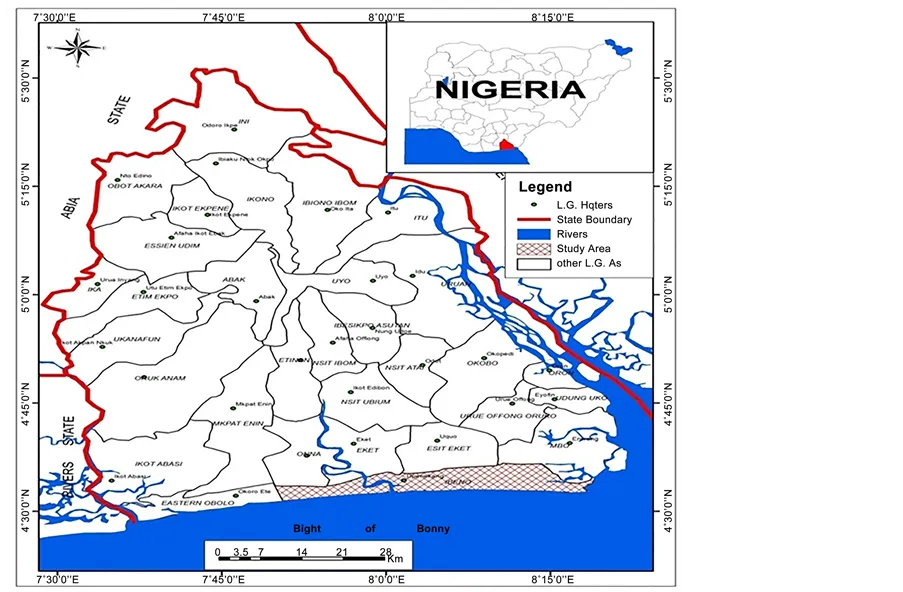
Before the creation of Akwa Ibom State from the old Cross River State, Ibeno, Eket, Onna and Uquo (Esit Eket) was one administrative area.
Subsequently, Eket and Onna was made distinctive Local Government Areas, while Ibeno and Uquo (Esit Eket) formed Uquo-Ibeno Local Government Area with headquarters at Ibeno.
On December, 4th 1996, Ibeno Local Government Area was created from the defunct Uquo-Ibeno Local Government Area.
Migration: The Ibeno people are believed to have migrated from the Andoni people, with a history of movement from the Niger Delta region. Some accounts suggest they came to the Eket region around 1876, fleeing conflicts and the slave trade orchestrated by figures like King Jaja of Opobo.
Language: The people speak the Ibeno dialect, which is a blend of different languages, including Efik, Ibibio, Andoni, Ijaw, and Opobo. This linguistic diversity reflects their history of interactions with other groups in the region.
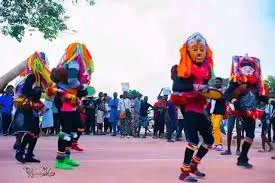
Cultural Heritage: Ibeno people have a rich cultural heritage with traditional institutions like Ekpe, Obon, and various age-grade systems (Nka). Their culture is similar to that of the Oron people and Eastern Obolo LGA
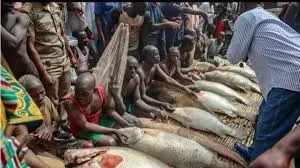
Occupation: The primary occupation of the Ibeno people has historically been fishing, given their coastal location. However, farming and trading also play a role in their economy. The presence of oil companies like ExxonMobil (now Seplat) has also influenced the local economy.
The Ibeno people have historically relied on their coastal environment for fishing, which remains their primary source of livelihood. Fishing communities line the extensive coastline, supplying both local consumption and trade.
In addition to fishing:
Farming provides food crops for domestic use.
Trading supports local markets and inter-community commerce.
Oil Exploration: The presence of multinational oil companies, including ExxonMobil (now Seplat Energy), has reshaped the local economy. While it has provided employment and infrastructure, it has also sparked concerns over environmental degradation and land disputes.
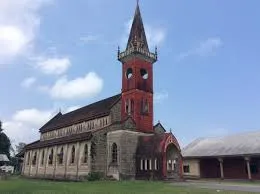
In 1887, Ibeno became one of the first places in the Niger Delta to embrace Christianity. The first Qua Iboe Church, founded by Rev. Samuel Bill, was established here, marking a major cultural and religious turning point for the community.
Historic Qua Iboe Church building
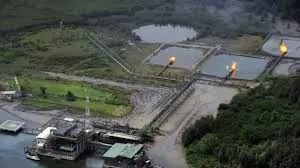
Ibeno LGA is a major oil-producing hub in Nigeria. The operations of multinational oil companies have brought both development and challenges:
Shaping local politics
Fueling conflicts over land ownership
Creating environmental and ecological issues that affect fishing and farming livelihoods
Oil production facility in the Niger Delta
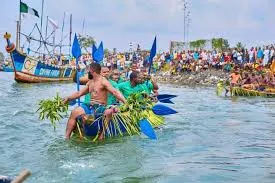
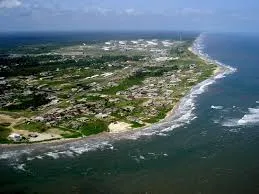
The Ibeno Beach, stretching over 45 kilometers, is recognized as the longest beach in West Africa. It serves as both a natural wonder and a major tourist attraction, drawing visitors for its scenic beauty, cultural festivals, and recreational activities.
Wide-angle photo of Ibeno Beach with tourists and fishermen
Ibeno Local Government Area is richly endowed with a diverse range of valuable natural resources, both on land and in its coastal waters.
1.Crude Oil
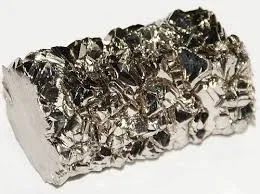
2.Titanium Ore (Ilmenite)
3.Lithium
4.Rock Salt
5. Silica Sand
6. Bitumen
7. Limestone
8. Clay
9. Sand
10. Assorted Sea Food
| Village | Clan | Notes / Territory |
|---|---|---|
| Akata | UTIP | Western Island Territory |
| Atabrikang | UTIP | Western Island Territory (Town) |
| Okoroutip | UTIP | Western Island Territory (Major Town) (OP) |
| Ntafre | UTIP | Western Island Territory (Town) (NE) |
| Idung Nne Ekpa | UTIP | Western Island Territory (OP) |
| Idung Nne Ndio | UTIP | Western Island Territory (OP) |
| Idung Awaji Oqure | UTIP | Western Island Territory (OP) |
| Okoroifor | UTIP | Western Island Territory (OP) |
| Essien Ulo Afia | UTIP | Western Island Territory (OP) |
| Okorouforo | UTIP | Western Island Territory (OP) |
| Essien Owong Awaji | UTIP | Western Island Territory (OP) |
| Odoro Ikot Okoroifo | UTIP | Western Island Territory (OP) |
| Akpaifor | UTIP | Western Island Territory (OP) |
| Akama | UTIP | Western Island Territory (NE) |
| Iyoung Osuk | UTIP | Western Island Territory (NE) |
| Awazieyet | UTIP | Western Island Territory (NE) |
| Ositayok | UTIP | Western Island Territory (NE) |
| Opolom | AKWAHA | Central Island Territory (OM) (Town) |
| Iwou Okpom Opolom | AKWAHA | Central Island Territory (Town) |
| Ikot Enwang | AKWAHA | Central Island Territory |
| Okoroitak | AKWAHA | Central Island Territory |
| Ita Awaji | AKWAHA | Central Island Territory |
| Oruk Utong | AKWAHA | Central Island Territory (OM) |
| Okorinaiza | AKWAHA | Central Island Territory (OM) |
| Okorilim | AKWAHA | Central Island Territory (OM) |
| Okoroifor Opolom | AKWAHA | Central Island Territory (OM) |
| Atia | IBANG | Eastern Island Territory |
| New Barrack | IBANG | Eastern Island Territory |
| Itak Idim Ukpa | IBANG | Eastern Island Territory |
| Itak Idim Nne Ekpe | IBANG | Eastern Island Territory |
| Itio Esek | IBANG | Eastern Island Territory |
| Okomo Ita | IBANG | Eastern Island Territory |
| Itak Ibang | IBANG | Eastern Island Territory |
| Okposo I | IBANG | Eastern Island Territory |
| Okposo II | IBANG | Eastern Island Territory (OS) Town |